A game with a lot of meaning, some darkness and comedy, and way too much dialogue. That’s the short version.
I came into Disco Elysium knowing almost nothing about it, other than that it’s a phenomenal game. People say the game is amazing, it’s unique, dark, and one of best-written games ever. I’ve heard people talking about how they wanted to replay it making completely different choices. I mean, that sounds like a must-play, right?
But after getting started, I was very surprised to see at what kind of game it actually is. A wall of reading. Heavy political and socioeconomic stuff. Race, poverty, ideology.
I was expecting an action-adventure game, or possibly some platforming, but there’s none of that here. It’s more of an interactive story. It reminds me of games like Heavy Rain or Fahrenheit: Indigo Prophecy.
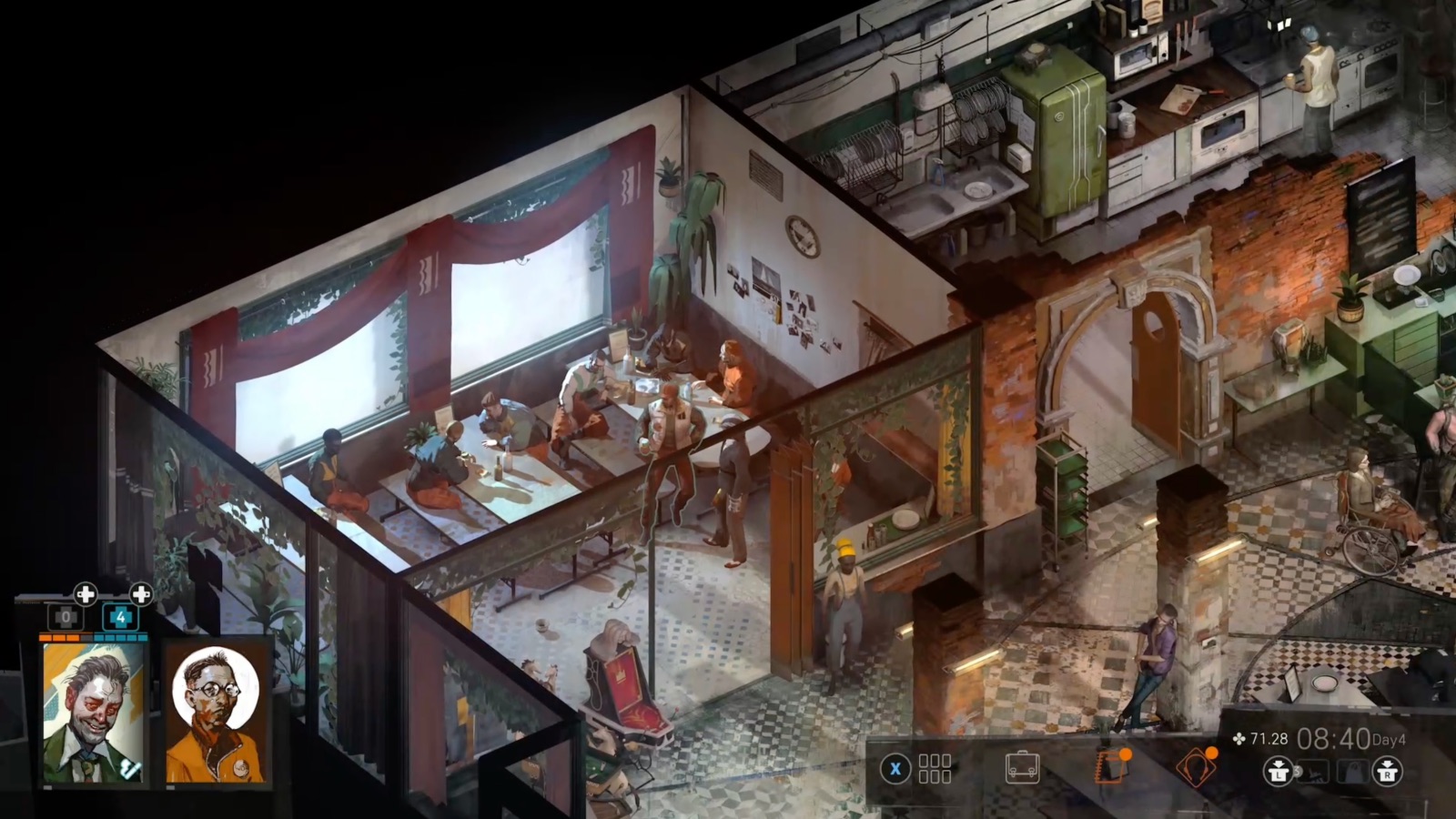
I won’t pretend I loved it. This is the longest it’s ever taken me to get into a game, and to be honest, I’m not sure I ever fully did. I came close to quitting multiple times over the course of the 36 hours it took me to finish the game. What kept me going was the detective work: wanting to know who killed the guy hanging behind the hostel, finding items, checking things off the list, getting a new lead from a conversation. That part I genuinely enjoyed. The rest of it, I had to push through.
What worked for me
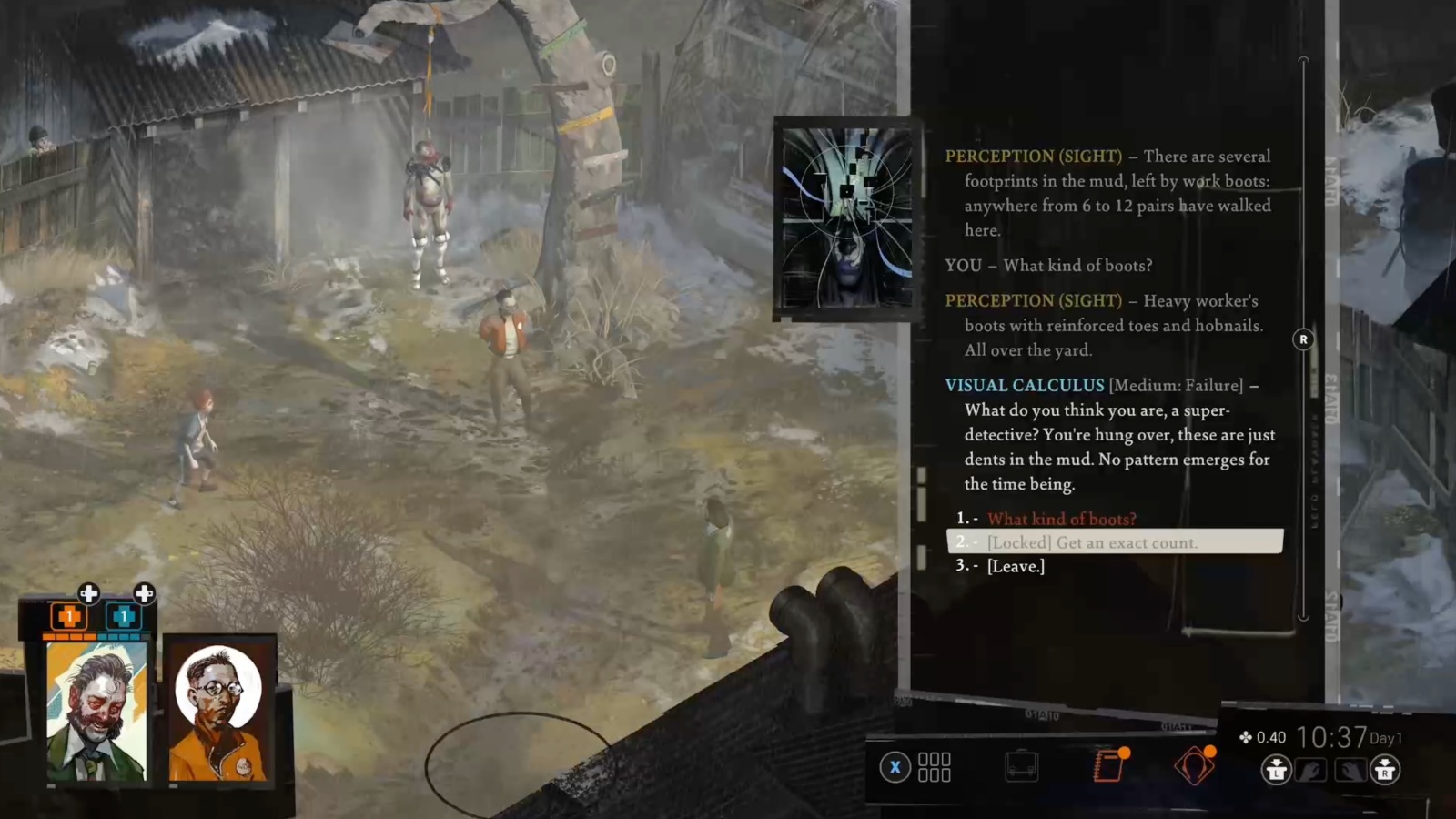
The murder mystery is the strongest part of the game. The way it dangles answers in front of you without ever quite handing them over kept me invested even when I was bored with the surrounding dialogue. The little side tasks were good too. Short, easy to wrap up, and useful for learning the map and the characters. Doing a lot of these things changes interactions in the future too, which was always neat.
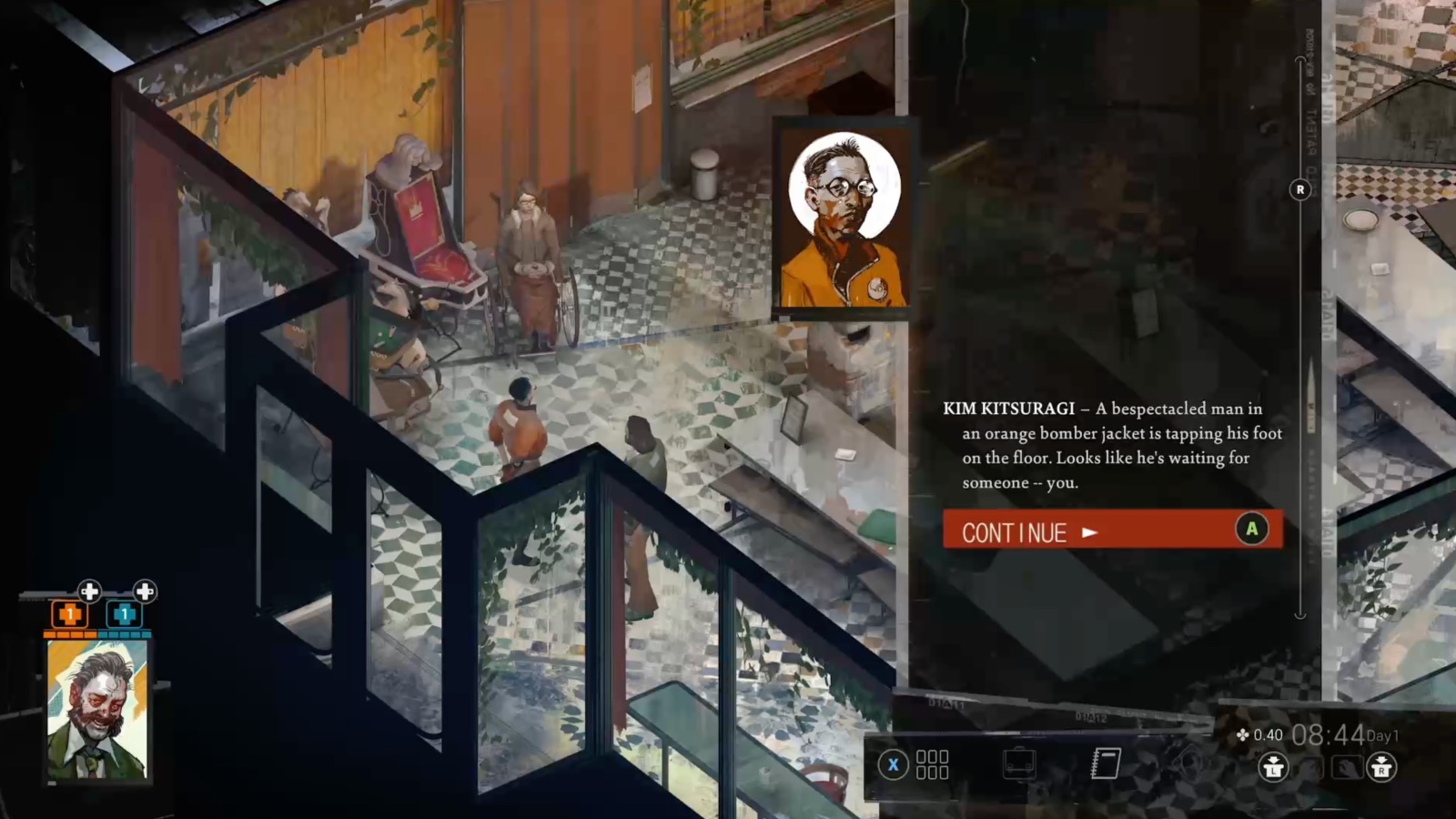
Kim Kitsuragi was also a pleasure to have around. He’s a likeable partner. Nice without being a pushover, sarcastic when he needs to be, occasionally disappointed in you but never cruel about it. There were moments where I think his presence actually pulled me toward more ethical choices than I would’ve made on my own. He felt like the voice in the room reminding me how a cop is supposed to behave.
I played the Final Cut version on the Xbox Series X, which has full voice acting. The original version didn’t and a lot of people say it significantly improves the game. I can definitely see why.
The voice acting is one of the parts I looked forward to the most. The performances, the intonations, the emotion – none of it sounds like someone reading a script cold. Every character feels like a real person with real emotions, even the weird ones. It’s some of the best voiceover work I’ve heard in a game.
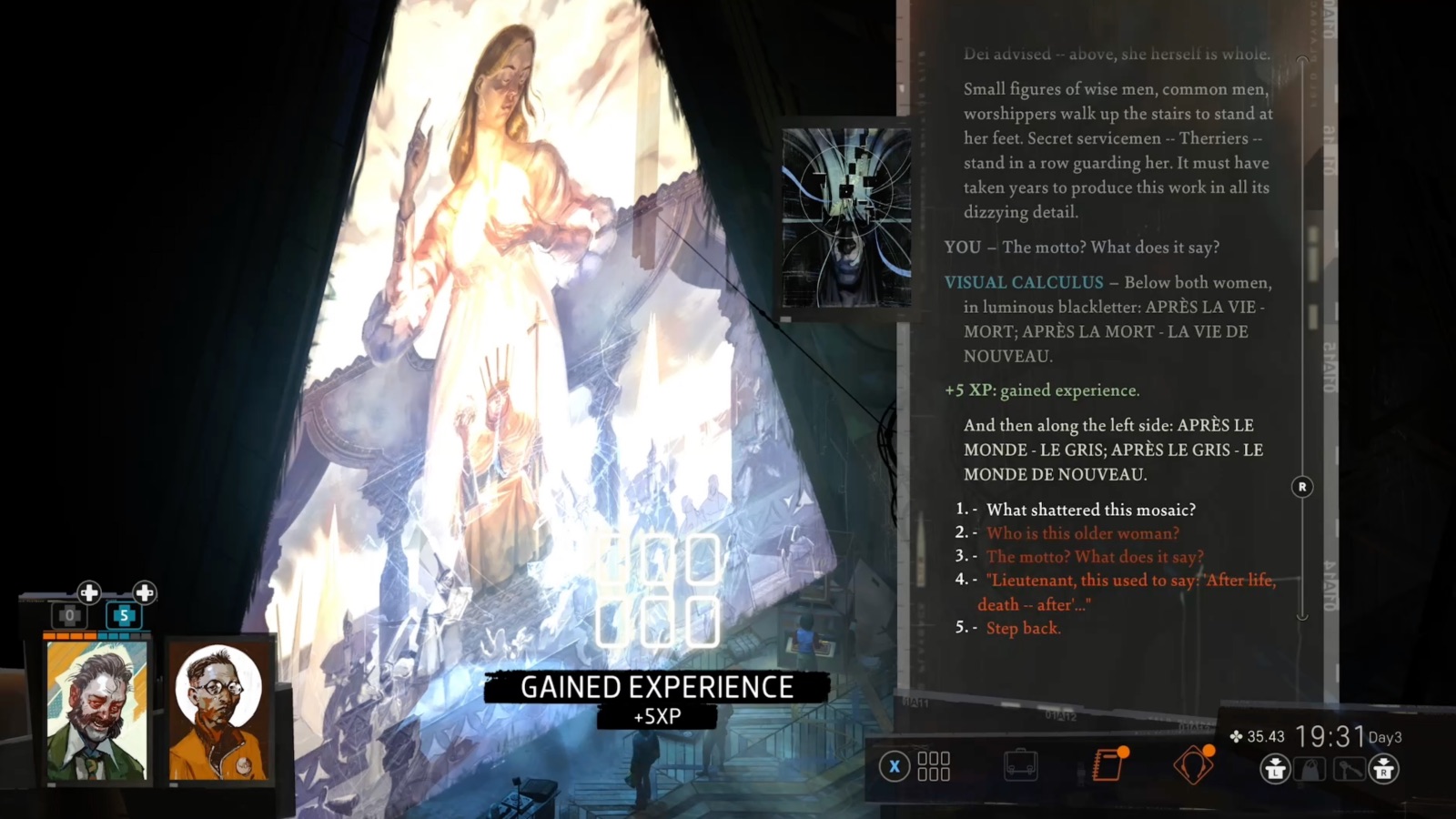
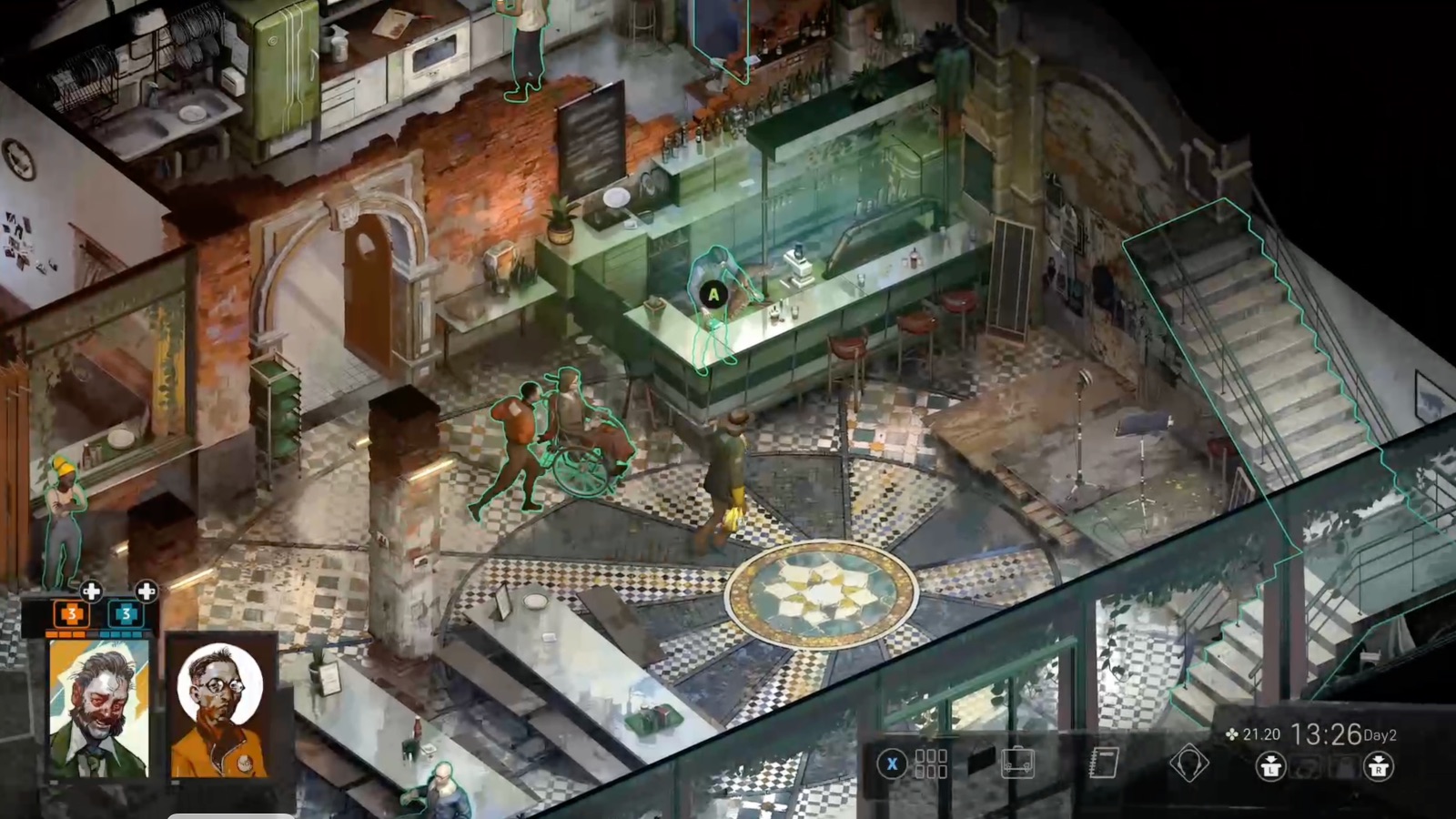
The art is a similar standout. The character portraits during dialogue look like professional oil paintings, and even the designs for the “thoughts” inside Harry’s head are intricate and strange. There’s a real handmade quality to all of it. You can tell people cared about every frame.
The Thought Cabinet and character skills satisfy RPG expectations
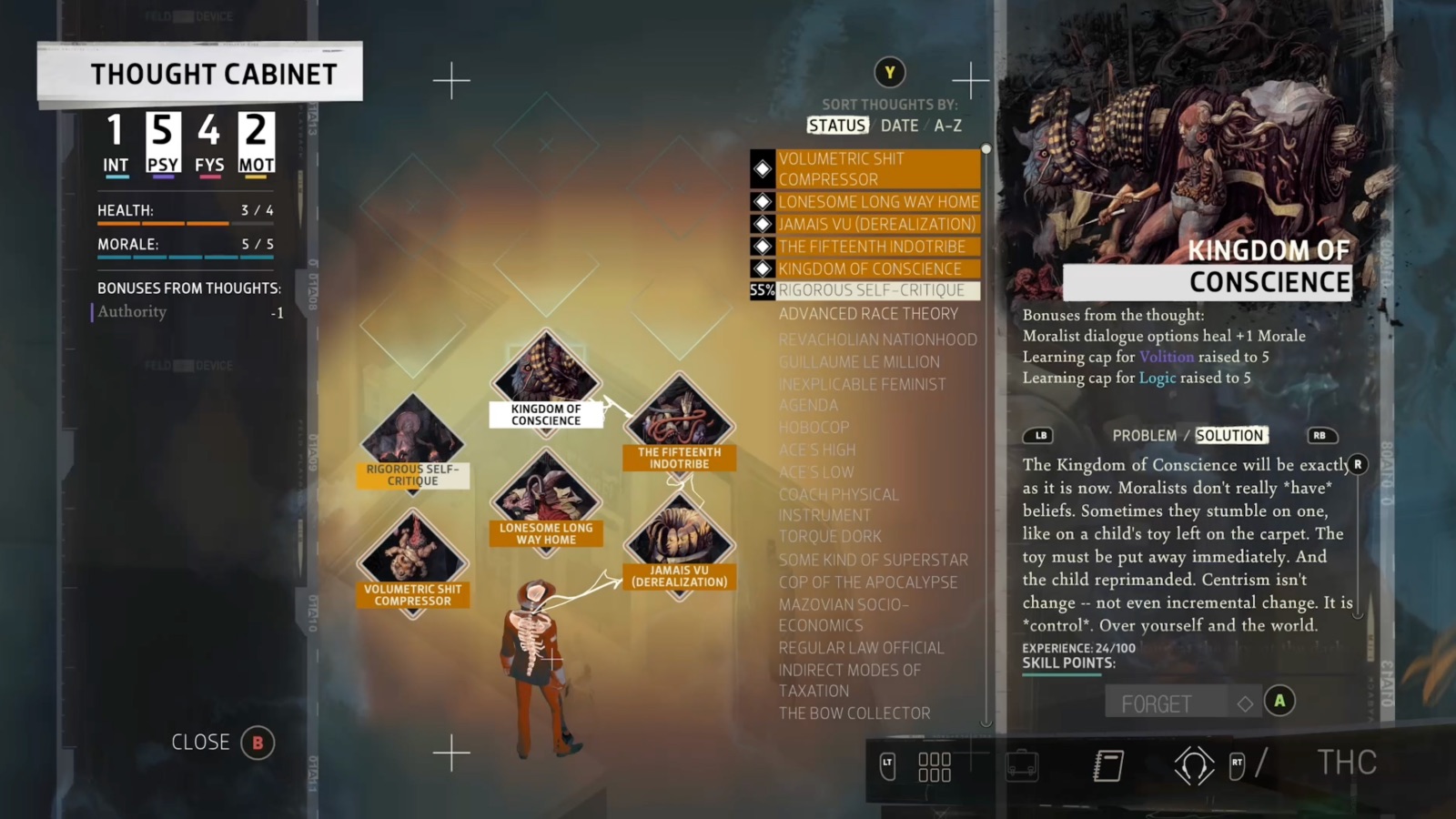
The Thought Cabinet and the character sheet are some of the most original things I’ve seen in any RPG. Twenty-four skills that act like voices in your head, arguing with you and lying to you and getting excited about things. I’ve never seen anything like this before. Building those up to improve dice rolls / skill checks (like Dungeons and Dragons) and slotting in Thoughts for passive bonuses is a clever system, and I enjoyed it when I actually engaged with it.
Unfortunately, I didn’t engage with it much. I picked from only a handful of Thoughts most of the time and didn’t upgrade many of them at all.
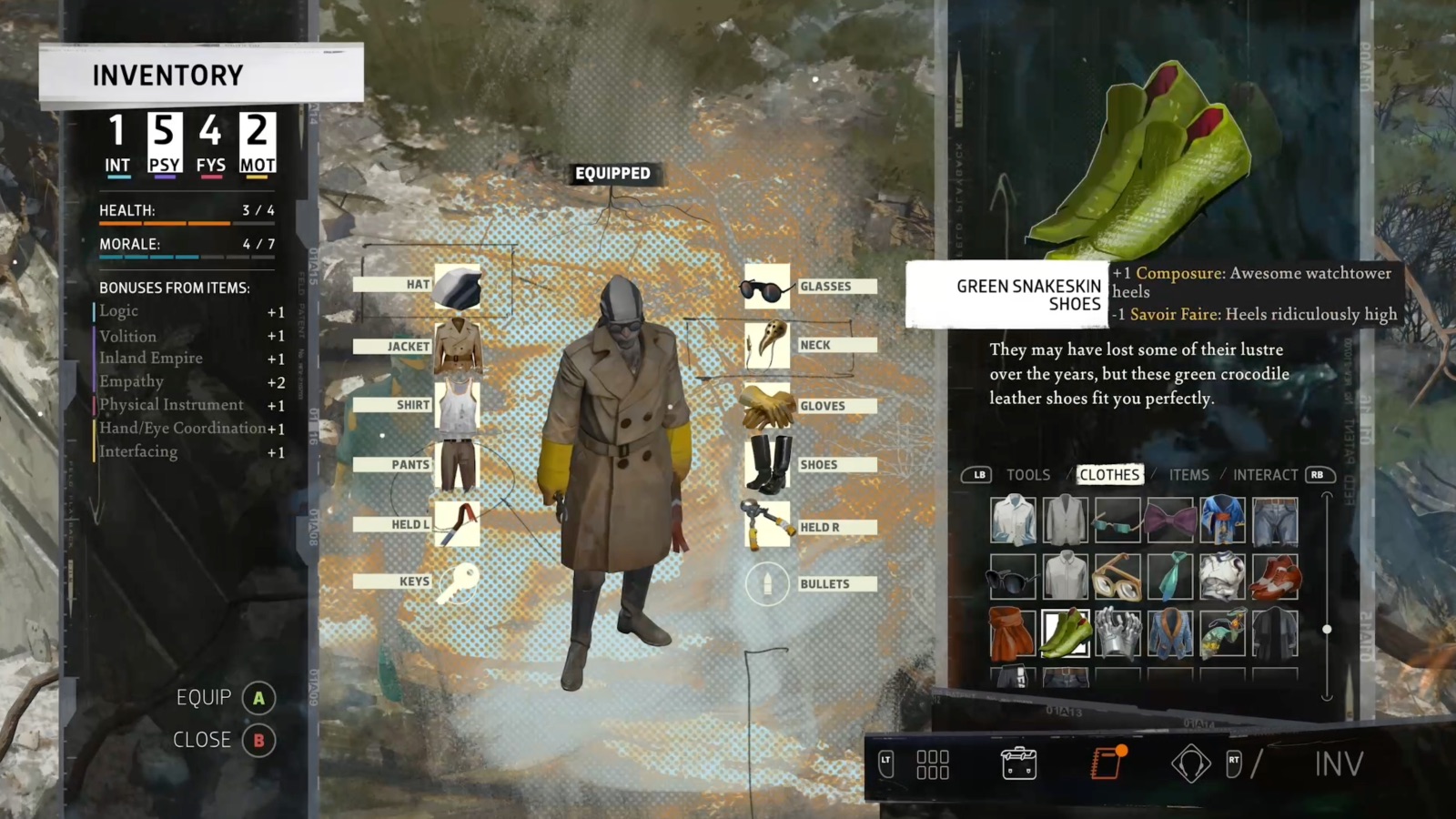
It also took me too long to utilize clothes to change character stats to get better skill checks, and the game doesn’t really walk you through any of that. So a lot of the depth here was wasted on me. That’s partly the game’s fault for not teaching it, and partly mine for not exploring it. Either way, the originality was refreshing and I appreciated it even when I underused it.
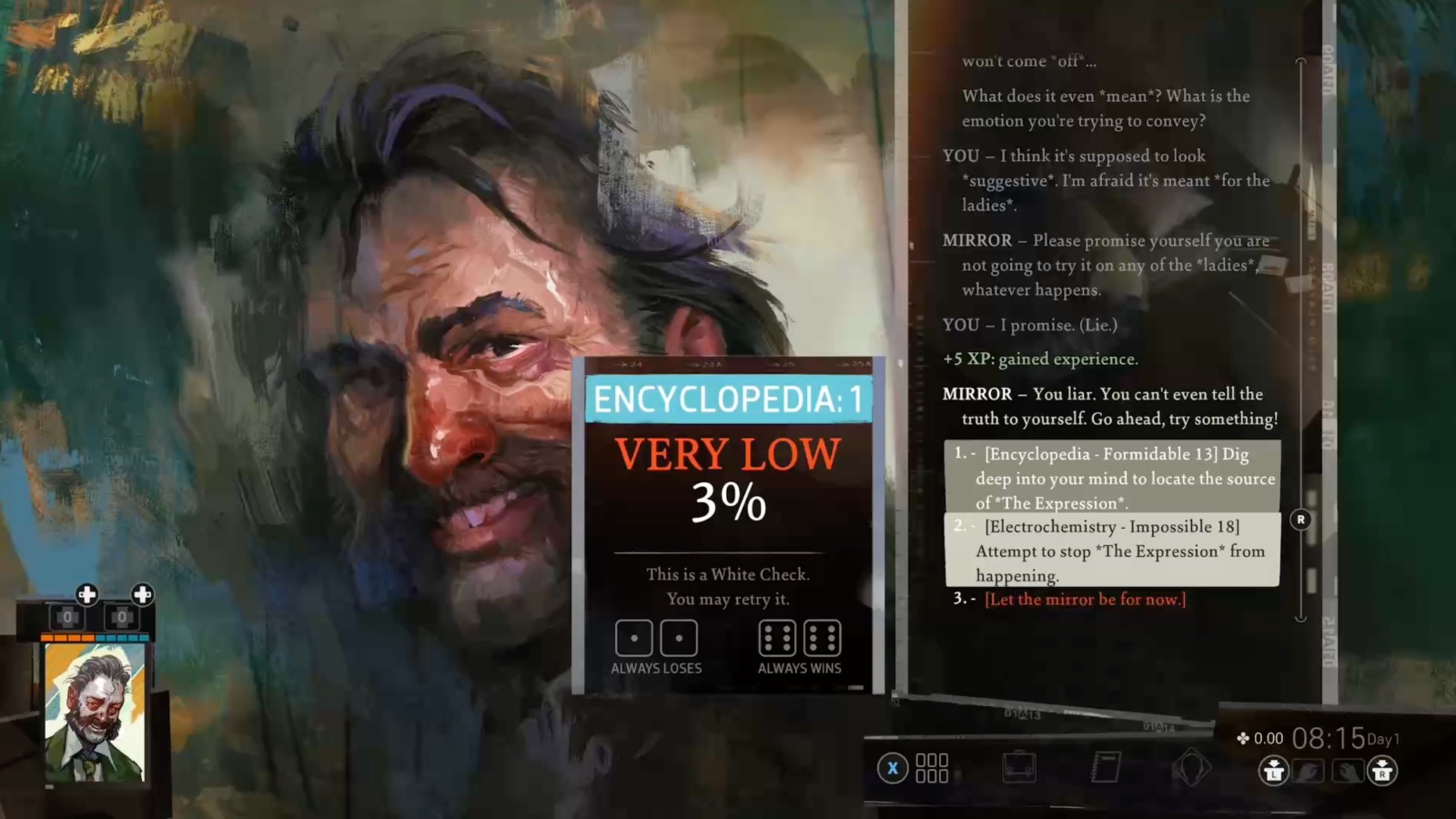
The humor saved a lot of stretches for me too. Some of the wackier dialogue options and the ridiculous things Harry will do and say (or could potentially say if you choose) are genuinely funny. I picked the Sensitive personality because it felt like the most unlikely choice for me, but that was when I thought this was a more action-based game.
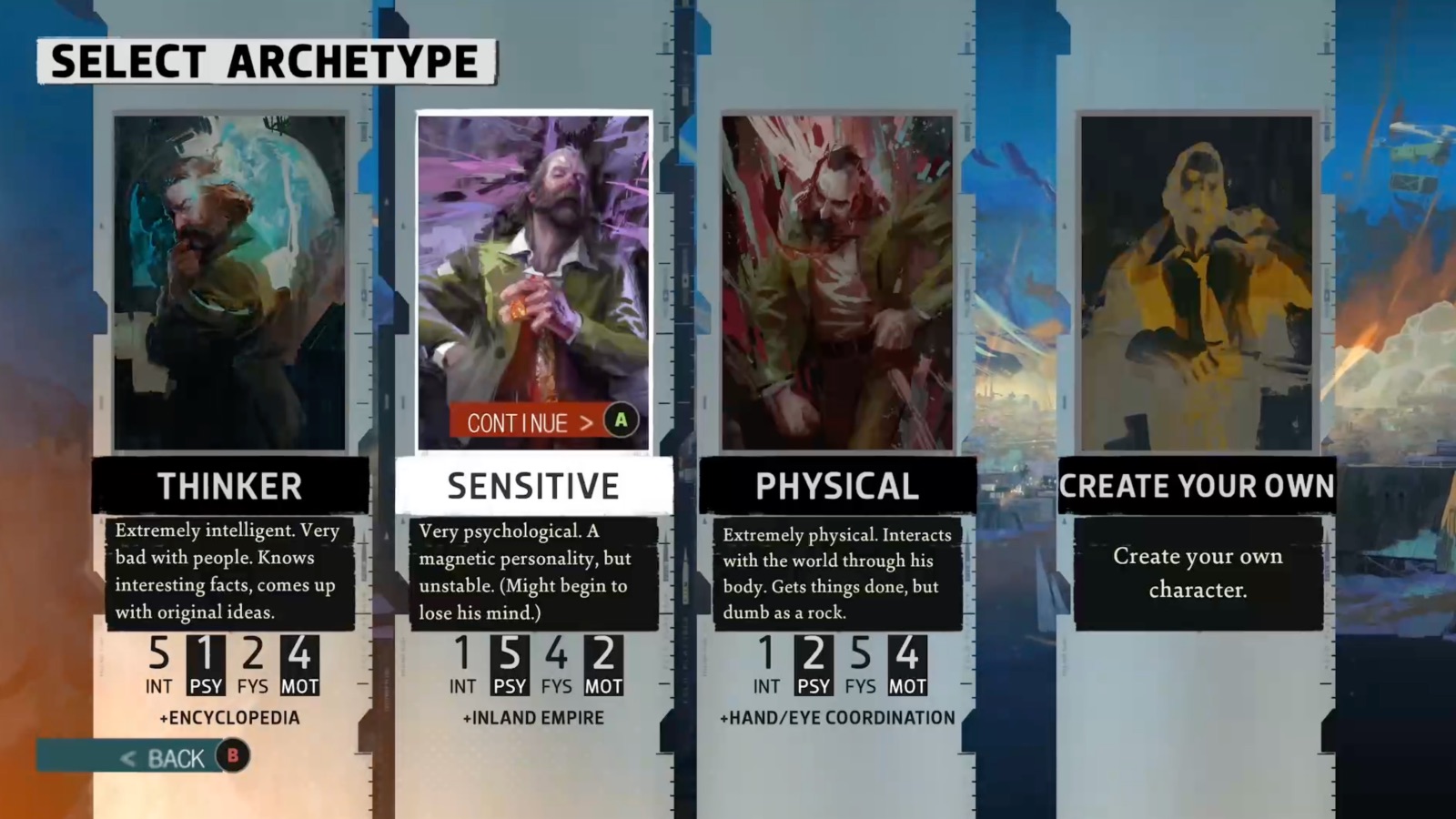
Looking back, I probably chose a more accurate personality for myself. I leaned into the empathetic options most of the time, but I’d still take the weird option when it didn’t mean being a jerk to anyone.
What didn’t work
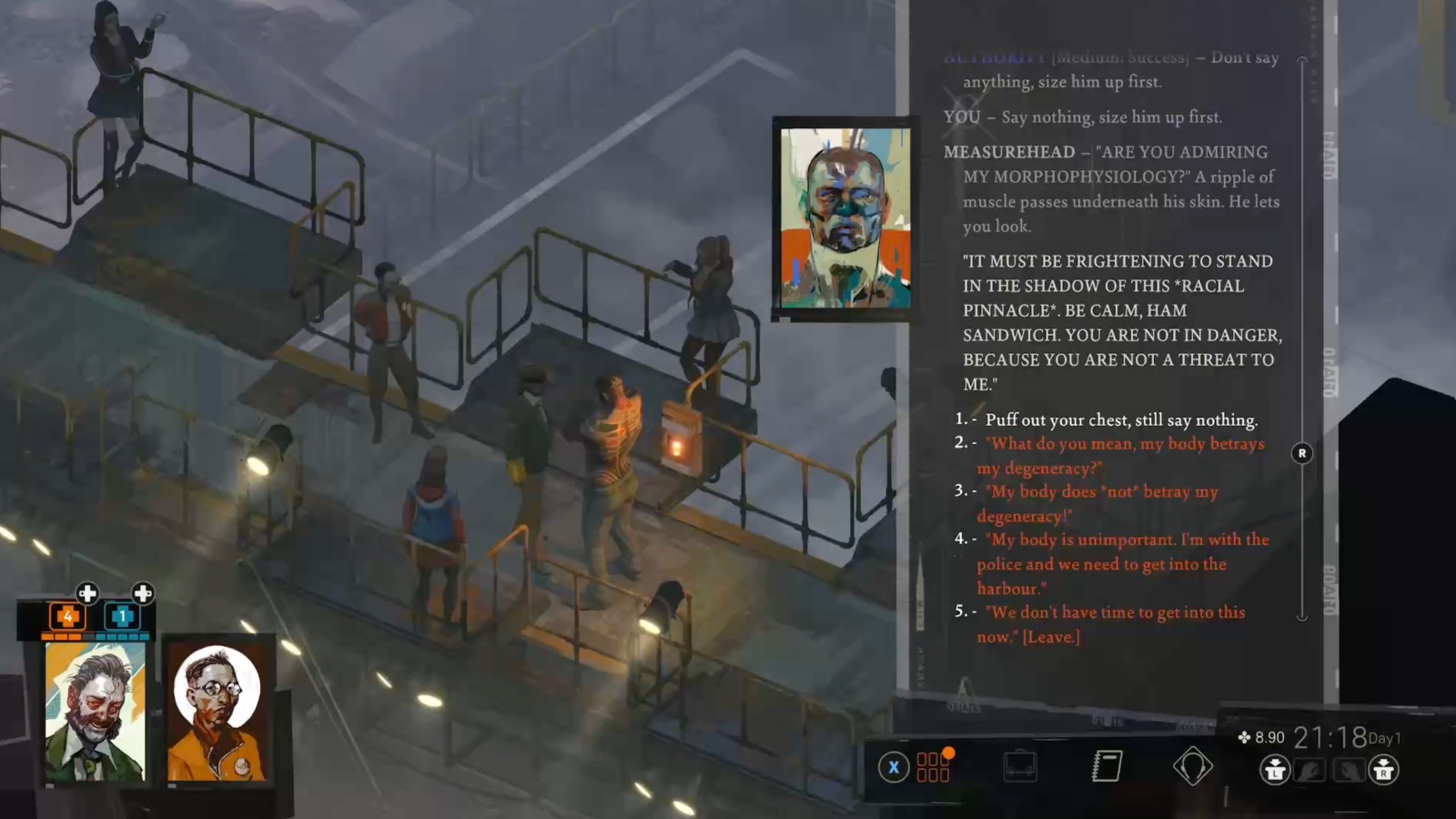
The amount of dialogue is too much. You can spend half an hour to an hour talking to one or two people in a single area if you’re trying to see all the options, and a lot of it doesn’t go anywhere. The Pale gets mentioned many times but doesn’t seem to play a role. There’s worldbuilding about racism, nationalism, and made-up cultures that takes up huge chunks of conversation. I tried to read everything because I was worried about missing something important, and a lot of it turned out to be filler for the actual plot. That’s the single biggest reason I almost stopped playing.
I’ll give the Pale partial credit. Looking back, it could have been meant to mirror what’s happening to Harry. His memory is gone, his sense of self is gone, and the world has this slow erasing fog creeping across it. So it’s not pointless, exactly. But the connection could have been made more obvious. As I was playing, it just felt like long detours into lore that didn’t pay off.
Some of the heavier stuff hit closer than I expected. I grew up around a lot of addiction and a lot of broken lives, including in my own family. The game keeps pulling that into the foreground.
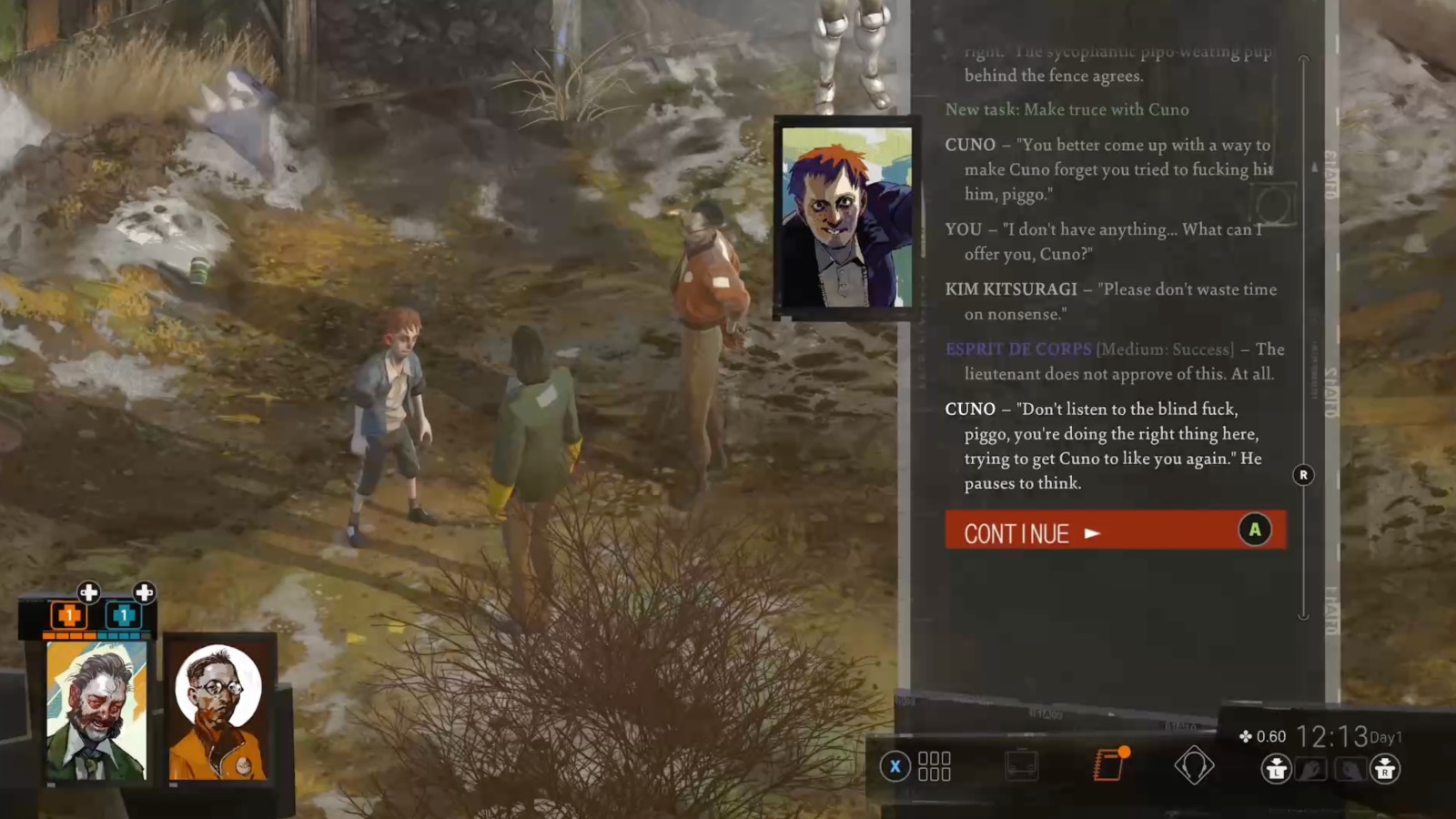
Cuno’s situation, drug abuse, alcoholism, and how it’s passed down through generations. That landed with me. I just didn’t enjoy sitting in it for that long. The cartoonish edge of the game softened it for me, and I think that was actually a good thing. It let me take the harder parts in smaller doses.
The world also felt too thin. The dialogue keeps telling you Martinaise is poverty-stricken and broken, but the map has a lot of dead space where nothing’s happening. The east side near the boardwalk felt particularly bare.
There were also days (days in the game) where I wanted to keep going but had run out of things to do, so I had to sleep just to advance. A few more side characters, or more to do with the ones already there, would’ve helped a lot.
Politics are heavy
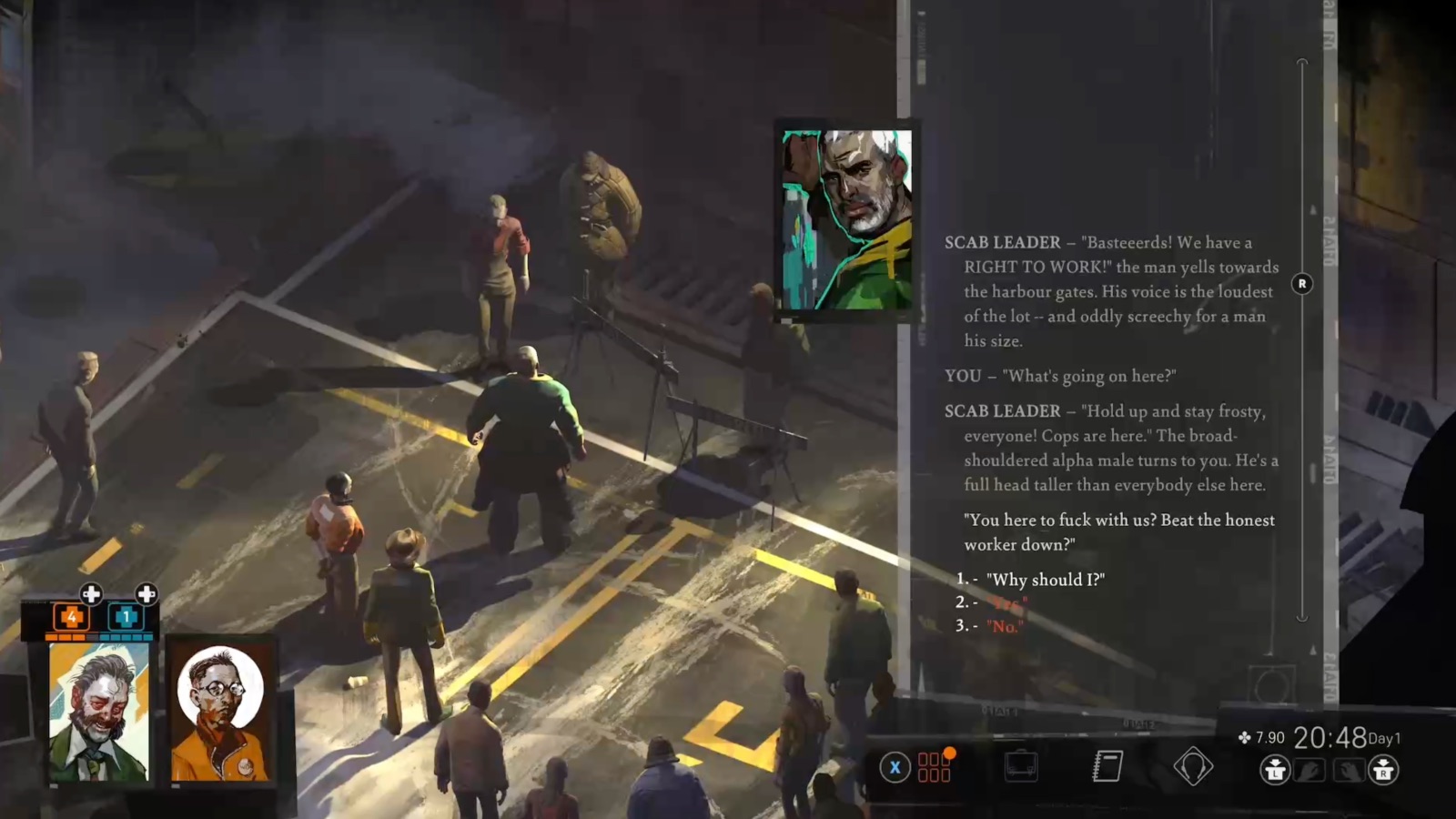
I tried to stay non-aligned. I leaned moralist by default, just doing what felt like the right thing for the people in front of me. There were moments I was tempted to commit to one of the extremes just to see how the story would shift, and looking back I kind of wish I had.
At first, the politics felt like a side topic in this game, but in retrospect, I believe they’re a major part of the story. The murder is a labor dispute. A strike-breaker hired by a megacorporation, killed by someone wrapped up in the union side of things. So while I didn’t personally connect with the political content the way some players do, I can’t really argue that it’s separate from the story. It is the story. I just didn’t engage with it as deeply as the game wants you to.
The Phasmid was magical
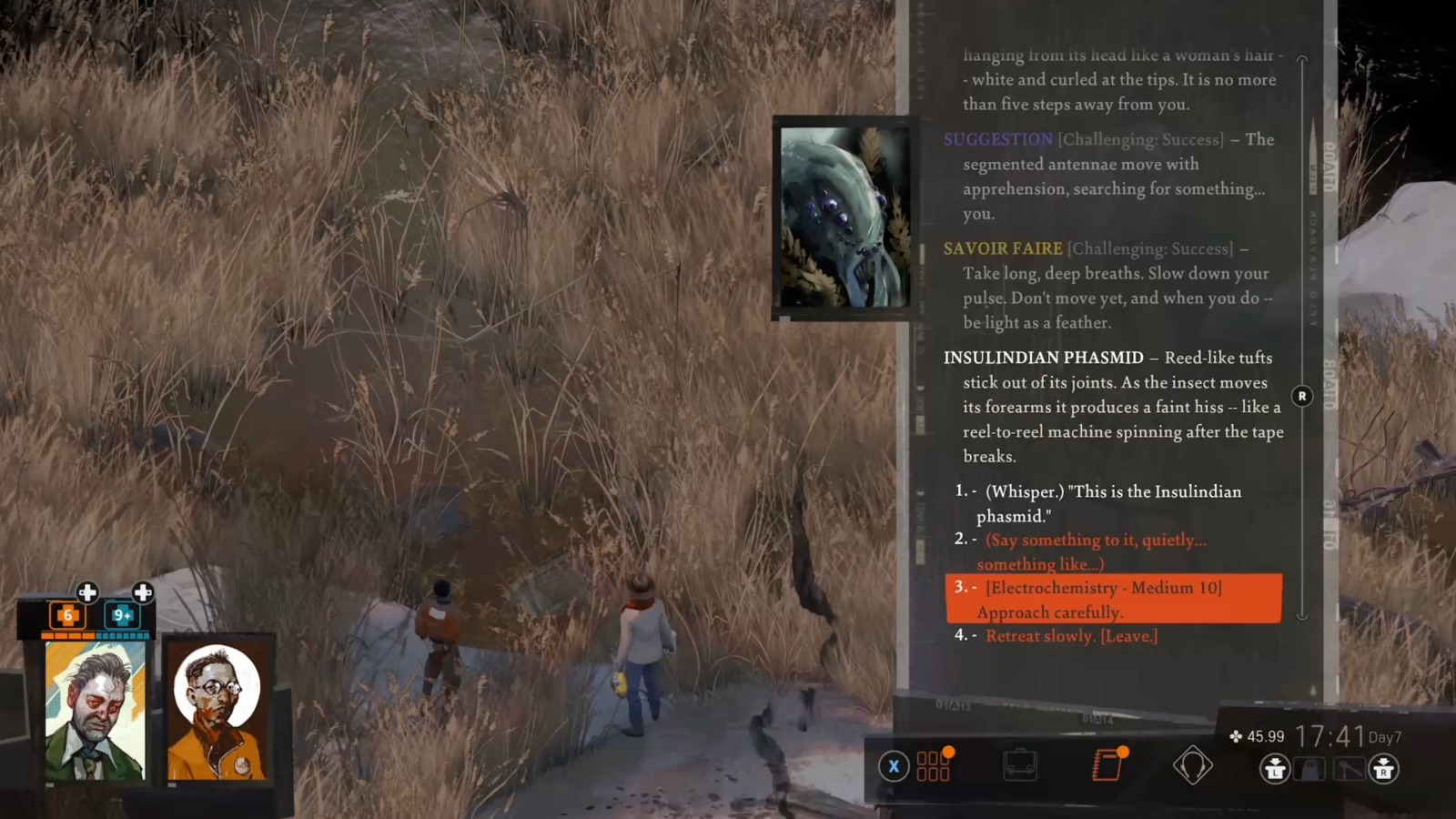
One of the best moments in the whole game for me was the Phasmid. Watching Kim, who’s been the serious, skeptical voice the whole game, get his worldview totally rocked was great. You can see it in his gestures and voice. It made me actually excited to go tell the cryptozoologist couple what we’d seen, and I was disappointed there wasn’t a chance to do that before the credits rolled. Little stuff like that is where the game shines. I wish more of it had hit that note.
Dora
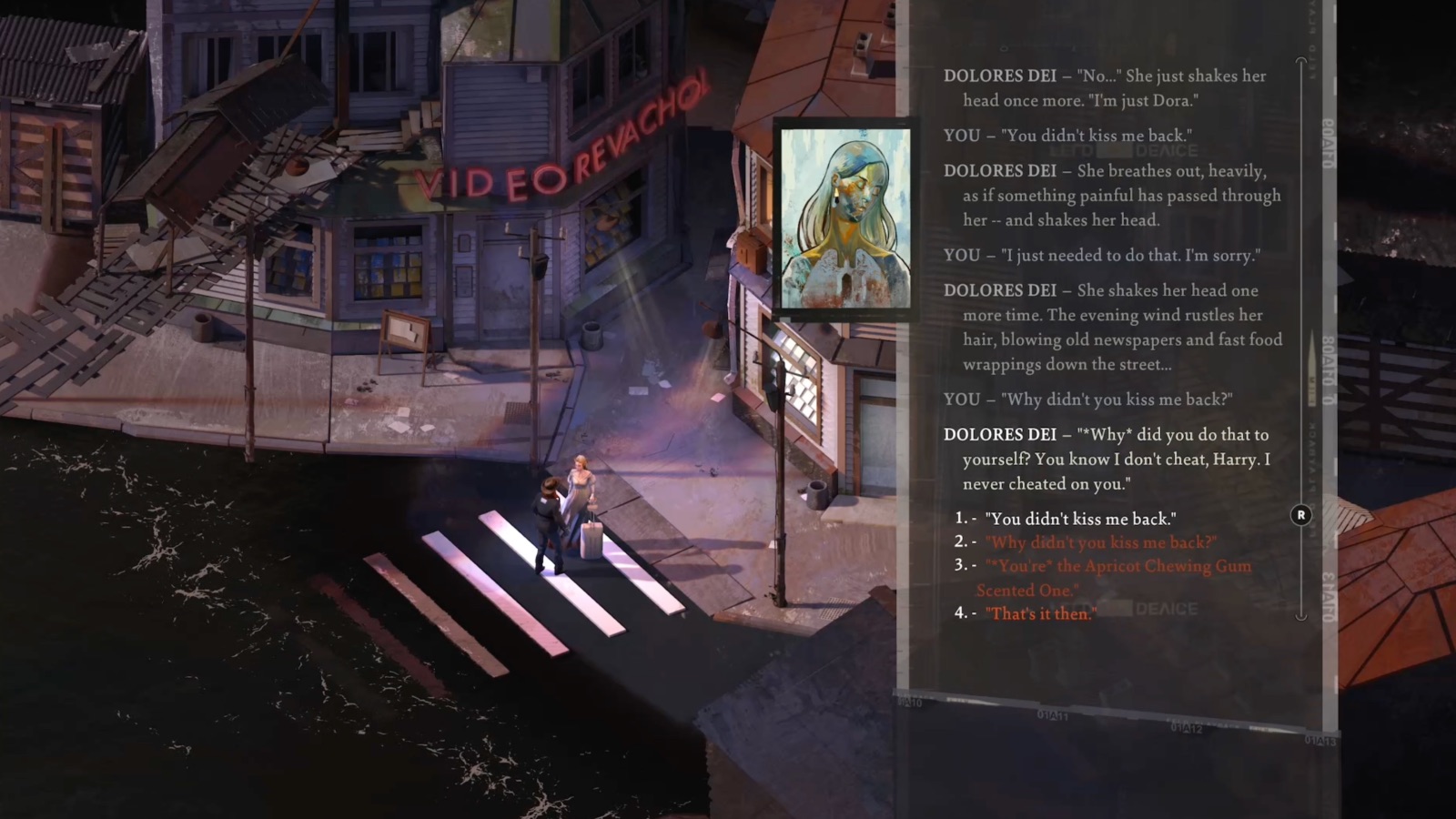
The Dora thread is the other thing I want to call out. The game telegraphs it for hours. You know something happened with a woman in his past, you know it’s the reason he drank himself into amnesia and why he’s so broken. So when you finally get to the memory, it’s not a surprise. But it’s still well done. You see what really happened and why Harry is the way he is, and you end up feeling bad for both of them. That section was satisfying.
The ending is unsatisfying
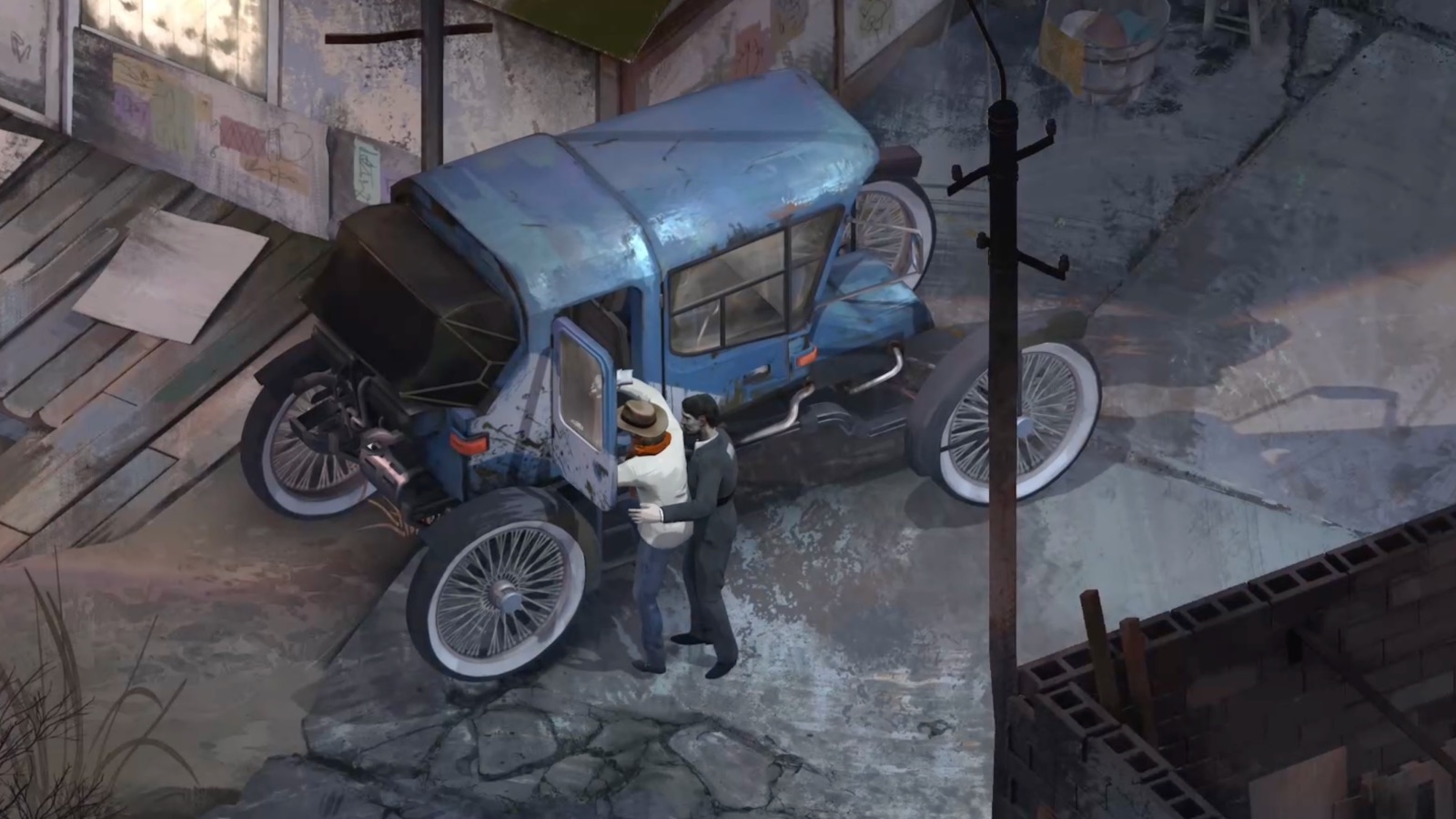
It ends abruptly. I thought I was about to head somewhere new and talk to more people, and then it was just over. I would’ve liked some closure on where things go next. A chance to wrap up some of the side threads, like telling the cryptozoologists about the Phasmid, or having a real conversation with Kim about everything that happened. Instead it just sorta stops. It wasn’t a bad ending, but it didn’t feel like it was enough after the amount of time I’d put in.
Replayability
I can see why people replay this game. Different builds, different political alignments, very different dialogue. If you loved it the first time, the structure is set up to give you another version of the experience.
For me, the dialogue volume is the wall. I don’t think I can sit through all of that again right now. But I’m not saying never. The first several hours were a slog, and a lot of that was because I didn’t understand how the world worked. Now that I do, a second playthrough could move a lot faster, and I’m curious what a hardline communist or fascist run would actually look like. So maybe. Even though I found the game boring in a lot of places, I appreciated the originality enough that I might come back for another go someday.
Who I’d recommend Disco Elysium to
People who like reading. People who are into politics, socioeconomics, philosophy. Highly intellectual folks. If that’s your wheelhouse, this is probably a top-tier experience.
If you’re like me and you want some action, want to play more than read, want a story that gets to the point, I’d steer you somewhere else. It doesn’t take long to realize that the writing here is different. It’s clearly written by someone who is probably smarter than the average person, but I think it’s to the detriment of the game. There’s a good story buried in here, but it’s wrapped in too many words.
If they make a sequel
Keep the discovery, the mystery, the wackiness, the comedy. Keep Kim, or someone like him. Tighten the dialogue. Make the worldbuilding pay off in the plot more often. Give the world more density and less dead space, and give the Thought Cabinet a better on-ramp so more players actually use it. There’s a great game in this idea. I just don’t think this one quite got there for me.
But it’s fair to say that I might be in the minority. So many people say that Disco Elysium is addictive. IT also won four awards at The Game Awards 2019, including Best Independent Game. So maybe it’s just me.